Creating ADHD-Friendly Routines Through Mindful Living

Creating routines can feel like trying to catch mist with your bare hands when you live with ADHD. Just when you think you’ve got a rhythm going, it slips through your fingers. But what if the solution isn’t rigid scheduling or trying harder — what if it’s mindful living?

Mindful routines aren’t about perfection. They’re about intention, flexibility, and tuning into what really works for your brain. In this guide, we’ll explore how to build ADHD-friendly routines using mindfulness — and why this approach is a total game-changer.

Why ADHD and Traditional Routines Clash

Let’s be honest: most standard routines don’t account for how neurodivergent brains work. They often rely on consistency, motivation, and time awareness — all things ADHD can disrupt.

Common struggles include:

  • Time blindness
  • Forgetfulness or distraction
  • Executive dysfunction
  • Emotional overwhelm
  • Rigid expectations that feel stifling

That’s why mindful living — slowing down, checking in, and adjusting as needed — can make routines more realistic and sustainable.

What Is a Mindful Routine?

A mindful routine isn’t just a list of tasks. It’s a rhythm you build by:

  • Paying attention to how you feel
  • Noticing what helps you feel regulated
  • Letting go of what doesn’t serve you
  • Building in rest, transitions, and grace
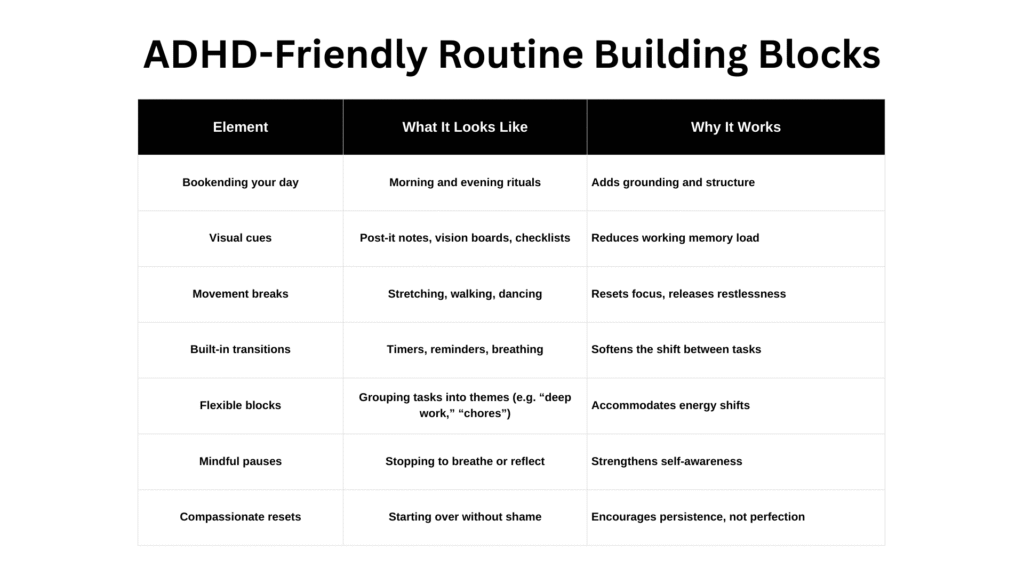
Core Elements of ADHD-Friendly, Mindful Routines

Here’s a breakdown of mindful tools that support ADHD brains:

Creating Your Own ADHD-Friendly Routine

Here’s how to begin building a sustainable routine — one that feels like you:

1. Start With Anchors, Not Agendas

Forget planning every hour. Pick 2–3 anchor points — like:

  • Morning wake-up ritual
  • After-lunch movement break
  • Wind-down routine before bed

These create structure without rigidity.

2. Build Habits Around Energy, Not Time

If your brain runs in bursts, follow that lead. For example:

  • Do high-focus tasks when your brain feels sharp
  • Save repetitive or passive tasks for low-energy windows
  • Use body signals (hunger, fatigue) to guide your pace

These create structure without rigidity.

3. Use External Supports

Set up your space and tools for success:

  • Use visual timers or alarms
  • Colour-code your calendar
  • Keep checklists where you’ll see them
  • Make routines visible (e.g. dry erase boards or phone widgets)

These create structure without rigidity.

4. Practice Mindful Check-Ins

Ask yourself throughout the day:

  • Use visual timers or alarms
  • Colour-code your calendar
  • Keep checklists where you’ll see them
  • Make routines visible (e.g. dry erase boards or phone widgets)

These create structure without rigidity.

5. Leave Room for “Reset Moments”

Mornings didn’t go as planned? Start again at lunchtime. The beauty of mindful routines is that they’re always editable — not a failed schedule, but a living system

Mindful Living Isn’t Lazy — It’s Strategic

Living mindfully with ADHD means acknowledging how your brain works and adjusting your life with it, not against it. It’s about slowing down so you can speed up in the right ways — with clarity, calm, and purpose.

Conclusion

If you’ve struggled with traditional routines, it’s not because you’re undisciplined — it’s because they weren’t designed with your brain in mind. ADHD-friendly routines grounded in mindfulness allow you to build habits that feel good, work with your energy, and evolve with your needs. And that’s where real consistency begins — with self-awareness, self-compassion, and small, powerful shifts.

Frequently Asked Questions

Leave a Comment

Your email address will not be published. Required fields are marked *