
Mastering the GTD Workflow with ADHD: A Clear Path to Focus and Action
If you have ADHD, managing daily tasks can often feel like trying to catch water with a sieve — everything slips through, no matter how hard you try to stay on top of it. But what if there were a structured, repeatable system that helped you regain control?
That’s exactly what the GTD workflow offers — a five-step method designed to take the pressure off your working memory and give your brain the clarity it craves.
In this article, we’ll walk through each stage of the GTD (Getting Things Done) workflow and explain how it can be adapted to support the unique needs of an ADHD mind.

What Is the GTD Workflow?
The GTD workflow is a simple but powerful system developed by productivity expert David Allen. It breaks down everything you need to do into five stages:
Capture → Clarify → Organise → Reflect → Engage
Each stage builds on the previous one to create a smooth, stress-reducing system that helps you go from overwhelmed to on top of things.
Why ADHD Brains Thrive with Structured Workflows
People with ADHD often struggle with executive function — the brain’s ability to plan, organise, and manage tasks. The GTD workflow acts as an external executive function, guiding you step by step and reducing decision fatigue.
Instead of relying on memory, motivation, or last-minute panic, GTD gives you a map.
The Five Stages of GTD (and How to Make Them ADHD-Friendly)
1. Capture: Empty Your Brain
This is where everything begins. You take every task, idea, or worry and get it out of your head and into a trusted system — a notebook, app, whiteboard, or voice memo.

Why It Helps ADHD:
Your brain’s working memory is already working overtime. Capturing thoughts stops them from spinning endlessly in your mind.
ADHD Tip:
Keep capture tools everywhere — sticky notes on the fridge, a notes app on your phone, or even a waterproof notebook in the shower.
2. Clarify: What Is It, Really?
Look at each item you captured and ask: Is this actionable? If so, decide what the next physical step is. If not, either file it for reference, schedule it for later, or toss it.

Why It Helps ADHD:
Vague tasks (like “work on project”) become real obstacles. Clarifying breaks them into bite-sized, doable actions.
ADHD Tip:
Use action verbs — “Email John about the report” is better than “John.”
3. Organise: Put Things Where They Belong
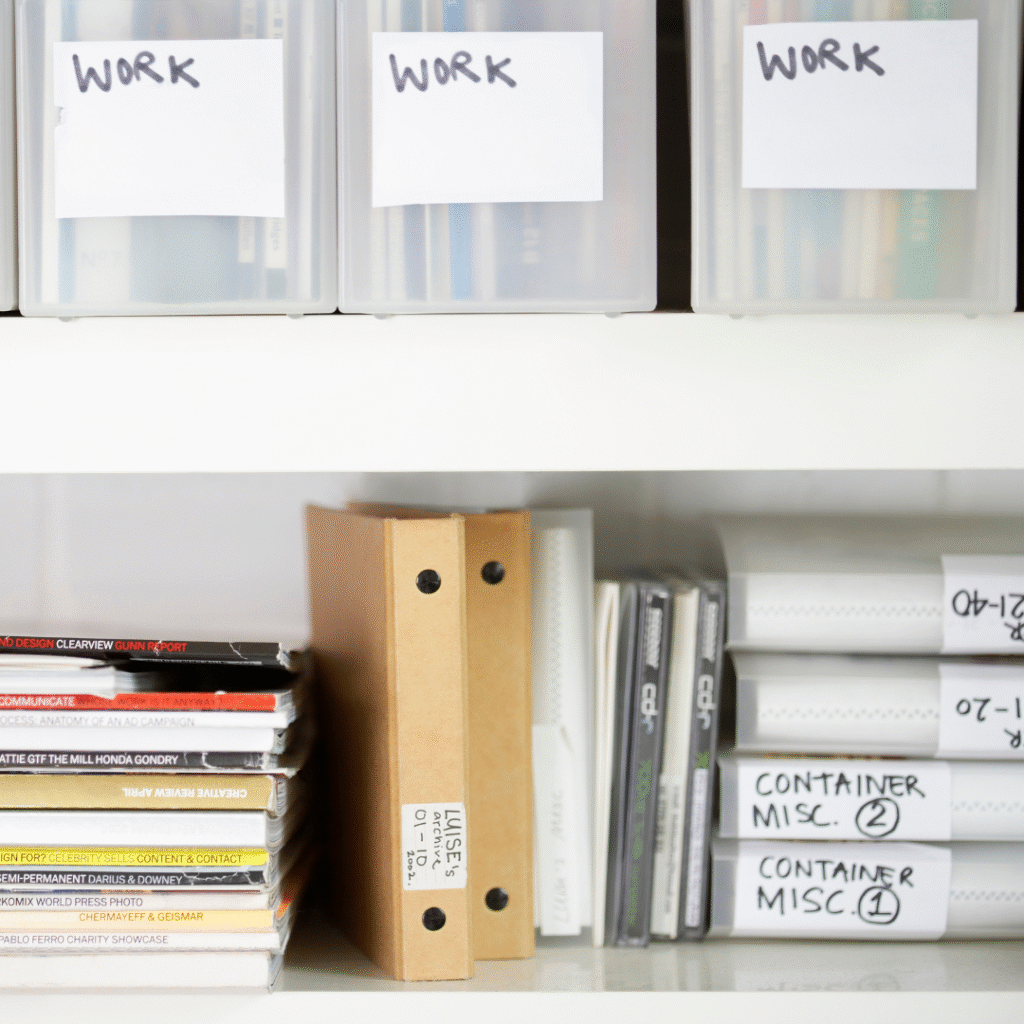
Now that you’ve clarified everything, it’s time to file it. Actions go on to-do lists, appointments on calendars, and ideas into reference folders. GTD encourages categorising by context, like: Calls, Errands, At Computer, At Home
Why It Helps ADHD:
ADHD brains struggle with sorting priorities. A clear system avoids mental clutter and indecision.
ADHD Tip:
Don’t over-organise. Keep categories broad and simple. The fewer clicks, the better.
4. Reflect: Review and Reset
This is where the magic happens. You review your system regularly — daily and weekly — to check what’s next, what’s changed, and what needs adjusting.

Why It Helps ADHD:
Without regular reflection, your system will collect dust — and then your brain goes back to chaos mode.
ADHD Tip:
Set reminders for your weekly review. Make it part of a relaxing routine with music, tea, or candles.
5. Engage: Do the Right Thing at the Right Time
With everything captured, clarified, and organised, you can now trust your system and focus on doing.

Why It Helps ADHD:
It reduces paralysis by analysis. No more staring at a massive to-do list, wondering where to start.
ADHD Tip:
Use a visual timer to limit decision time — pick a task within 2 minutes and dive in.
Building a Sustainable ADHD Workflow with GTD
GTD is not just a productivity method — it’s a system that frees up mental space. It empowers people with ADHD to:
- Reduce overwhelm
- Create trust in their systems
- Take consistent action with less burnout
Conclusion
The GTD workflow is like scaffolding for the ADHD brain — supporting your thinking, helping you take action, and giving you the freedom to focus without the noise. When applied consistently and adapted gently, it can transform scattered thoughts into real results.
So if your to-do list feels like a tangle of spaghetti, try walking through the GTD steps — one strand at a time.
Frequently Asked Questions
Absolutely. A notebook or a stack of sticky notes is all you need to start.
You can start using the basics in a day. Mastery comes with regular use — it’s more about habit than complexity.
Not at all. Even just capturing and clarifying can massively reduce ADHD overwhelm.
GTD is actually very flexible. You can adapt it to fit your energy, environment, and learning style.
That’s normal. Just reboot it whenever you remember — it’s a system that welcomes you back without judgment.